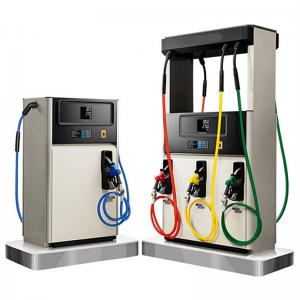
Fuel Dispenser CKD/SKD Assembly: Reducing Import Costs and Enabling Local Production
Fuel Dispenser CKD/SKD Assembly: Reducing Import Costs and Enabling Local Production
For global petroleum equipment importers, local manufacturers, and distributors, importing fully assembled fuel dispensers has become increasingly difficult. Common challenges include high tariffs on finished goods, high ocean freight costs due to the large volume of empty enclosures, and slow response to local customization needs.
Switching to component-based imports (CKD/SKD) for local assembly is a practical way around these issues. Depending on the country and product category, this approach can reduce initial costs by roughly 20–30% and improve gross margins.
Quick answer:
Shift from finished units to CKD/SKD assembly. Import certified explosion-proof parts, save on tariffs and freight (container utilization can increase significantly), and do final assembly locally using bolt-on components. This helps bypass some import barriers and supports local content requirements.
1. What Is Fuel Dispenser CKD/SKD Assembly?
Before changing your import strategy, it helps to understand what knocked-down assembly actually means in this context.
SKD (Semi-Knocked Down):
The dispenser is partially disassembled. Key systems like the hydraulic pump with motor, or the Flow meter with solenoid valve, are shipped as pre-tested modules. The local team does mechanical mounting into the housing, wiring, and final calibration.
CKD (Completely Knocked Down):
All parts are shipped separately—pipes, bare frame, cables, circuit boards, and mechanical components. This requires a more capable local assembly line but offers the greatest savings in duties and shipping space.
2. Why Switch to Component Imports?
Switching from finished products to local assembly can bring financial benefits in three main areas:
-
Tariff savings: Import duties on components are often 10–20% lower than on finished machinery, depending on the country. Shifting to components legally lowers the taxable value.
-
Freight efficiency: Fully assembled dispensers contain a lot of empty space. Shipping as components allows dense packing, increasing container utilization substantially and lowering per-unit shipping cost.
-
Local content compliance: Local assembly can qualify your business as a domestic manufacturer, which helps meet local content requirements in government tenders or national oil company procurement (e.g., Saudi Aramco, NNPC, PEMEX).
Example from the field:
A fuel dispenser distributor in Latin America set up a basic SKD line using modular components. After accounting for local labor, their upfront investment per unit dropped by roughly 30%, and delivery lead time went from 45 days to about 10 days.
3. How to Assemble a Fuel Dispenser Locally
Modern dispensers are designed for distributed assembly. With modular design and standardized interfaces, local assembly does not require welding, machining, or complex fabrication—it is essentially a bolt-on process.
| Main modules provided by component suppliers | ||
| Module Type | Key Components | Assembly Notes |
| Hydraulic & power | Explosion-proof motor, vane/suction pump (or submersible turbine pump) | Mounts via standard flange interfaces |
| Metering | Positive displacement Flow meter, explosion-proof solenoid valve | Pre-calibrated; accuracy 卤0.25% |
| Electronics | Explosion-proof enclosure, LCD display, motherboard, pulse encoders | Handles calculations and safety interlocks |
| Housing & delivery | Anti-corrosion chassis, fuel hoses, auto-stop nozzle | Can be painted in local brand colors |
Step-by-step assembly process
Step 1: Chassis and hydraulics
Secure the base frame to the workstation. Mount the motor and pump onto pre-drilled chassis slots using stainless steel bolts and gaskets. Use a torque wrench in a cross pattern to ensure leak-free seals.
Step 2: Metering and piping
Connect the flow meter and solenoid valve to the pump’s gas separator outlet. Use high-pressure hoses to connect the meter outlet to the discharge terminal.
Tip: Install fuel filters to keep local assembly dust out of the metering chamber.
Step 3: Wiring and explosion-proof interlocking
Mount the control box and display in the upper compartment, physically separated from the hydraulics below. Route motor power and encoder signal wires into the explosion-proof junction box.
The wiring harnesses use plug-and-play connectors with clear alphanumeric labels. Local technicians simply match the labeled leads to their slots—no cutting or soldering required.
Step 4: Paneling, nozzle installation, and calibration
Install the nozzle holster and hose, then attach the pre-painted exterior panels. Finally, calibrate the assembled unit using a master meter or volumetric prover to achieve ±0.25% accuracy.
4. Quality, Certification, and Technical Support
Component assembly does not have to mean lower quality. To help locally assembled units pass regulatory checks, we provide the following support:
-
Explosion-proof certifications: All core electrical components carry ATEX or IECEx certifications, with ratings up to ExdIIBT4 or [ExiaGa]IIA. Complete technical dossiers are available to assist with local approval.
-
Knowledge transfer: We supply 3D assembly drawings, video tutorials, and detailed SOP manuals.
5. FAQ
Q1: What tools are needed for a basic SKD line?
A: Basic SKD assembly requires: torque wrenches (pneumatic or digital), a hoist for heavy parts, multimeters, standard hand tools, and a volumetric calibration tank. No machining or welding equipment is needed.
Q2: How does weights and measures certification work for locally assembled units?
A: We ship pre-calibrated flow meters with factory test certificates. For local legal metrology (e.g., OIML-based standards), your team can fine-tune the meter’s adjustment screws or use the motherboard’s calibration software during final testing.
Q3: Is it safe to assemble electrical components locally without breaking explosion-proof integrity?
A: Yes. All high-voltage and signal components come pre-sealed in their explosion-proof enclosures. The plug-and-play wiring harnesses are designed so local workers never open those enclosures, keeping ATEX/IECEx compliance intact.
Q4: Can we customize the final product for local preferences?
A: Yes. Local assembly gives you flexibility over chassis color, logo placement, hose hanging height, integration with local payment systems, and language on the display.
Q5: What is the typical lead time and MOQ for CKD/SKD kits?
A: MOQ is typically 10 units per batch. Lead time from our factory to port is about 15–25 days, which is often faster than finished units due to better shipping flexibility.
Ready to explore local assembly?
Shifting to component imports can reduce freight costs and help you navigate trade barriers more effectively.
Contact us for a detailed component list (flow meters, pumps, controllers), custom SKD/CKD pricing, and a practical plan for setting up your local assembly line.